More Than a Café
The story of how a family restaurant in Guatapé became a home for cyclists, travelers, and Indigenous ambassadors from Colombia’s most remote regions.
Casa de Ciclistas began with something simple: family.
Coming out of the pandemic, Marcel and Johana wanted to help Johana’s family get back on their feet. Like many families in Colombia, they were looking for a way to rebuild, work together, and create something that could bring people through the door again. What started as a family business in Guatapé slowly became something much larger than a restaurant.
It became a meeting point. A home base. A bridge between travelers and the real Colombia.
A family beginning
Casa de Ciclistas was not created by a marketing team or a hospitality group. It grew out of a real need, a family effort, and a love for bringing people together around food.
Marcel and Johana wanted to build a place where people could eat well, feel welcome, and connect. At first, the dream was practical: create work, help family recover after the pandemic, and serve good food in one of Colombia’s most beautiful towns.
But Casa de Ciclistas quickly became something else: the place where curious travelers learn how to step off the beaten path, past the mass tourism maze, and into the real Colombia — the one that never makes it onto the packaged tour.
Discovering the real Colombia by mountain bike
Marcel and Johana share a love for mountain biking. That love changed everything.
As they began riding deeper into Colombia, they discovered something many visitors never understand: most of Colombia is not experienced from highways, airports, or polished tourist routes. Much of the country is connected by dirt roads, mountain paths, river crossings, rural trails, and relationships between communities.
They also discovered something else: Colombia is one of the most biodiverse countries on Earth.
This was not “Disneyland Colombia.” This was the real Colombia. A Colombia of mud, kindness, difficult roads, extraordinary landscapes, and communities that receive visitors not as consumers, but as human beings.
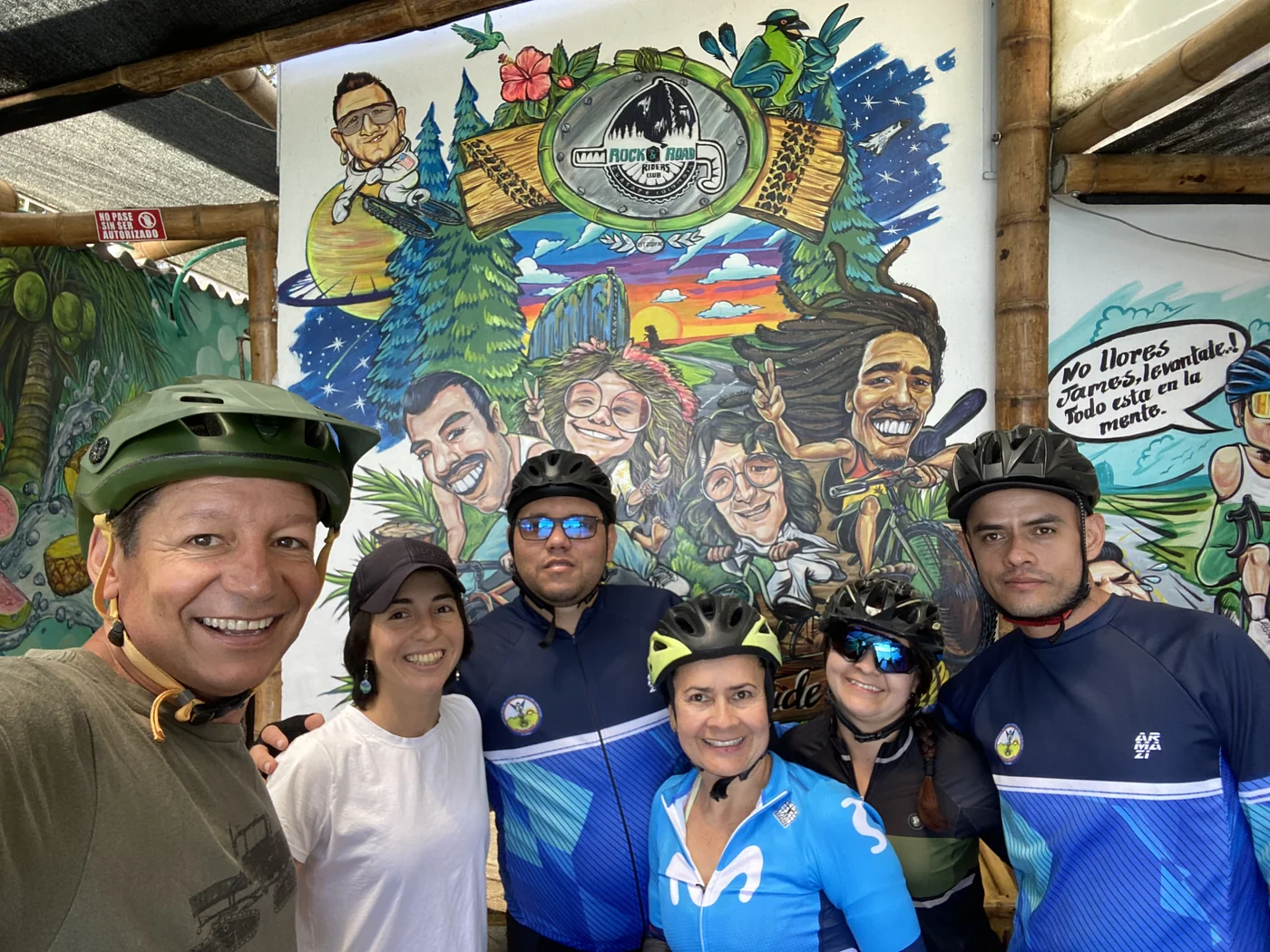
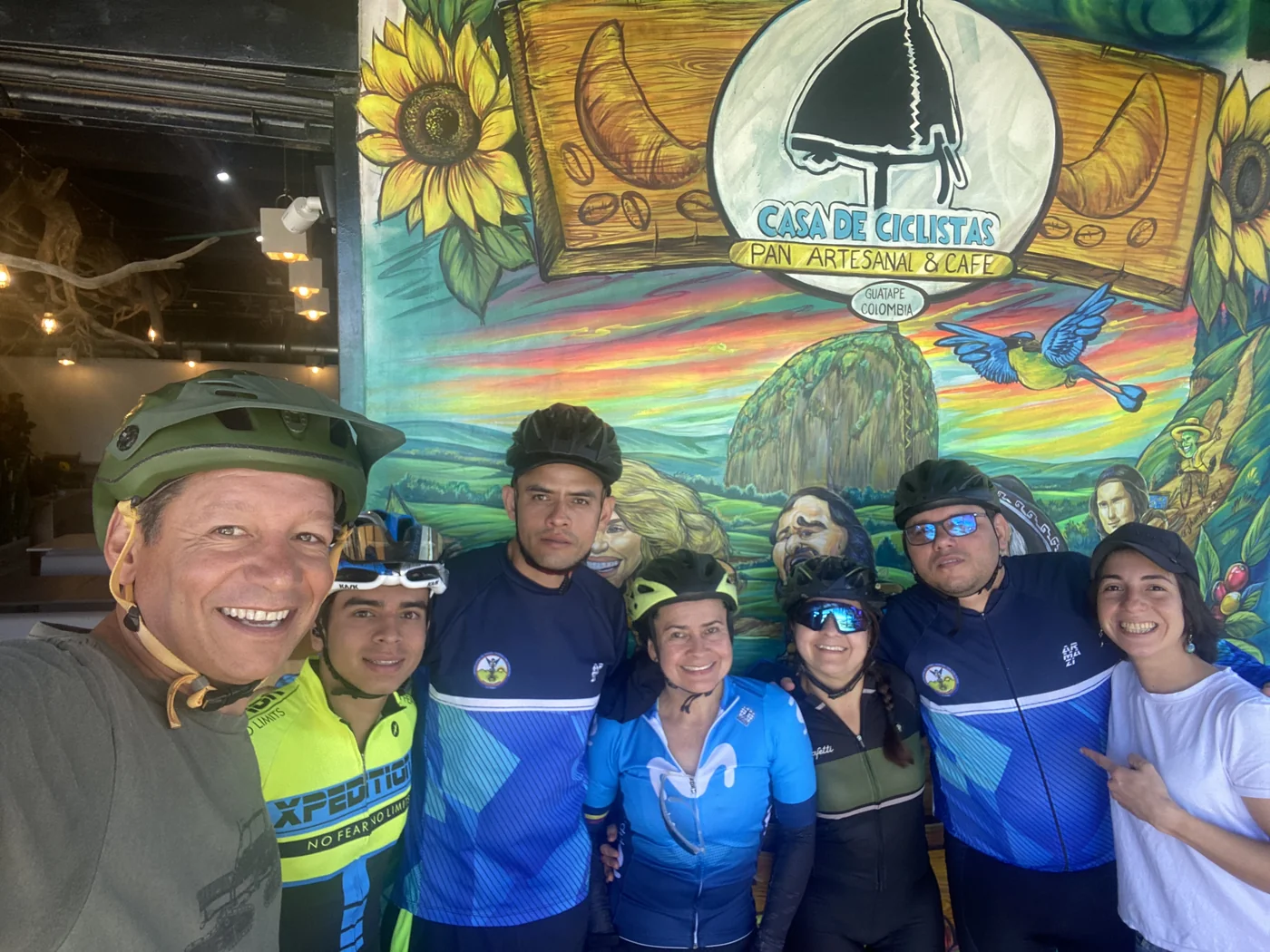
What started as the Rock & Road Riders Club became Casa de Ciclistas Guatapé.
Why it became Casa de Ciclistas
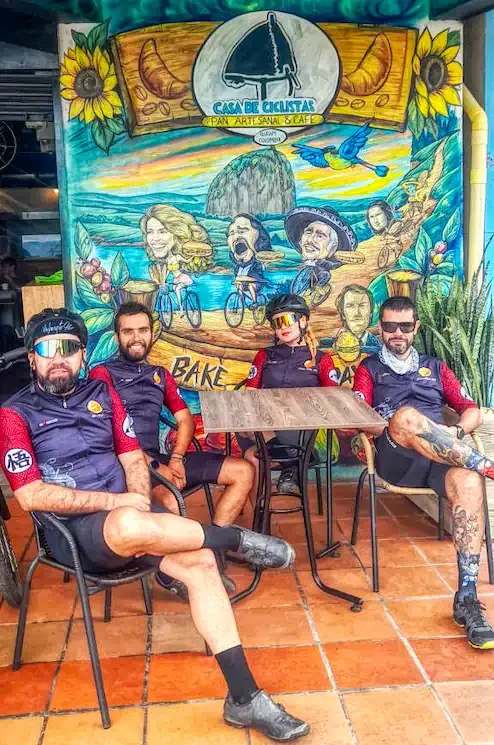
In the mornings, cyclists began to gather. Some came from Guatapé. Others came from Medellín, Bogotá, the coast, the mountains, and different corners of Colombia. Travelers from around the world began arriving too — people looking not just for breakfast, but for guidance, stories, and a way to understand where they were.
They came to fuel up before riding. They came for coffee. They came to ask which roads were worth taking, which trails opened into beautiful views, which communities were welcoming, and what parts of Colombia could only be understood by leaving the paved road behind.
Casa de Ciclistas means House of Cyclists. Not because only cyclists are welcome, but because cyclists helped turn this place into a home. It became a meeting point for people who believe travel should be active, curious, respectful, and alive.
From a restaurant to a bridge
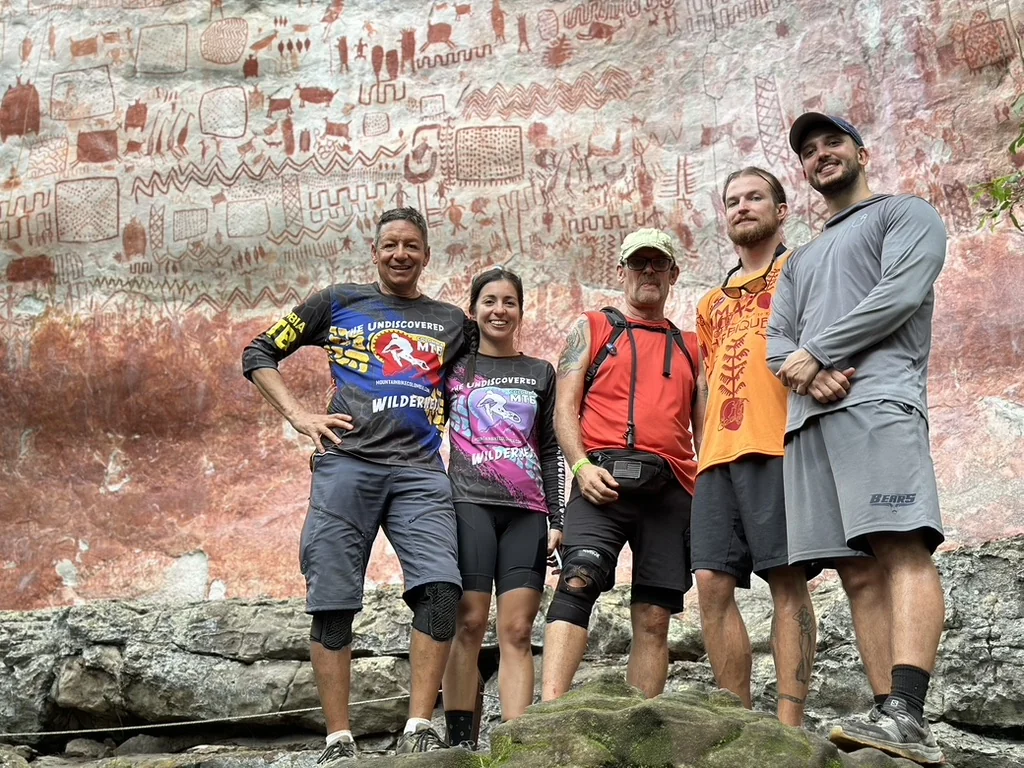
Through Mountain Bike Colombia, Marcel, Johana, and the people around them began traveling farther into the country. What began as mountain bike exploration became a way to build relationships with communities that most visitors never reach.
The bicycle became more than a sport. It became a bridge — between travelers and remote communities, between tourism and service, between adventure and responsibility.
The more they rode, the more they learned. The more they learned, the more they understood that Colombia’s most powerful stories were not found in the obvious places. They were found in the territories.
Humanitarian expeditions with Mountain Bike Colombia
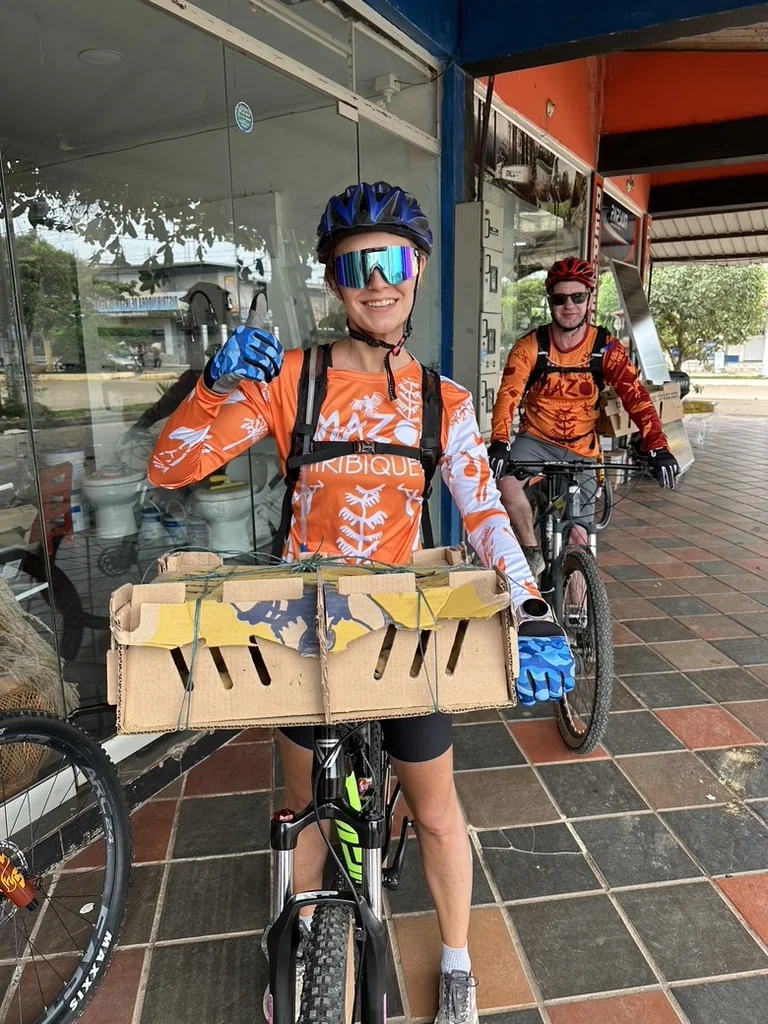
Mountain Bike Colombia’s expeditions became humanitarian journeys — trips that brought people, supplies, attention, and support into remote regions. These expeditions helped form relationships that could not be built from a distance. They were built slowly, through visits, conversations, meals, shared roads, trust, and return.
Because real support does not come from passing through once. It comes from showing up again and again.
children fed each day in the Colombian Amazon through Casa de Ciclistas, Mountain Bike Colombia, and Dulce Amazónica
That daily work is part of a larger commitment: to use tourism, food, cycling, and cultural exchange as tools for direct support. Not charity from above. Relationship from the ground.
From Guatapé to the Amazon
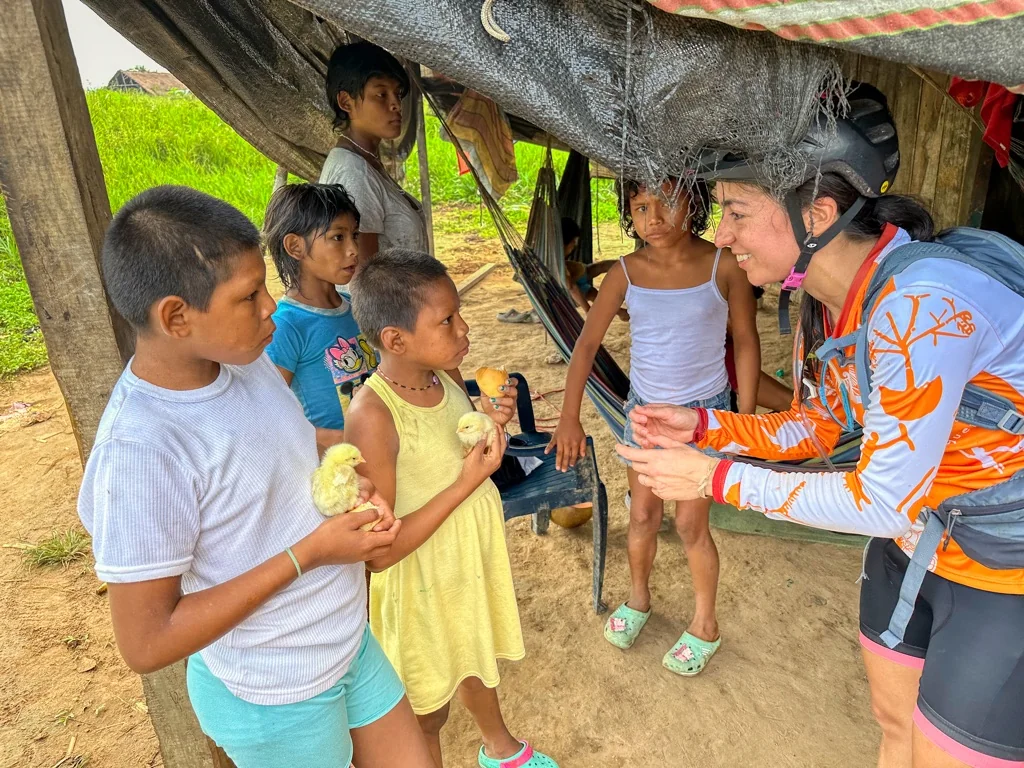
The deeper Marcel and Johana traveled, the more their path led toward Indigenous communities in the Colombian Amazon. There, they encountered cultures, knowledge systems, foods, medicines, crafts, and ways of seeing the world that are often spoken about from far away, but rarely listened to directly.
They also saw the challenges these communities face today: pressure on their territories, lack of fair access to markets, loss of cultural visibility, and the difficulty of explaining their reality to people who may visit Colombia without ever hearing Indigenous voices.
That question became Dulce Amazónica. And then it became something even larger: the Embajada de la Amazonía Colombiana.
Dulce Amazónica and the Embajada de la Amazonía Colombiana
Next to Casa de Ciclistas, Dulce Amazónica has become an Amazonian cultural embassy in Guatapé. Its purpose is not simply to sell products. Its purpose is to create presence.
Today, the project gives 21 communities from the Amazon, the Pacific, and the Andes a direct point of connection in one of Colombia’s most visited tourist towns. Through Dulce Amazónica and the Embajada de la Amazonía Colombiana, these communities sell their artisan work directly — no middleman — and share their foods, their stories, and their realities with visitors.
They share their stories and ancestral wisdom. No distant romantic idea of Indigenous culture. Real people. Real ambassadors from Indigenous nations. Real conversations.
The ambassador program
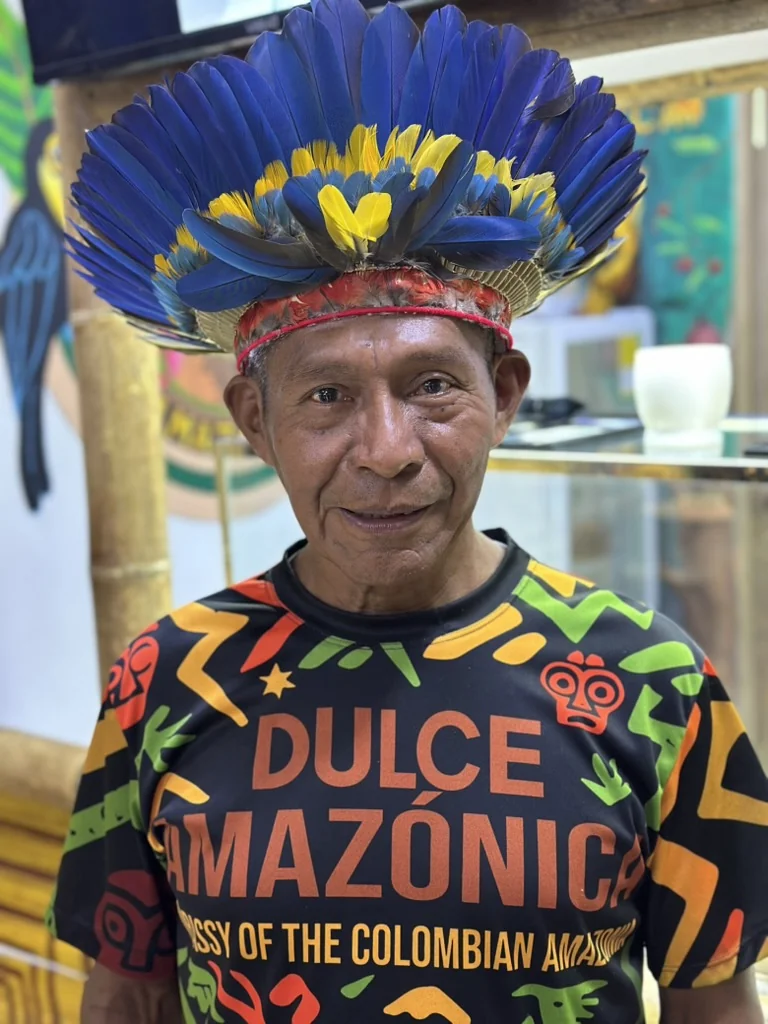
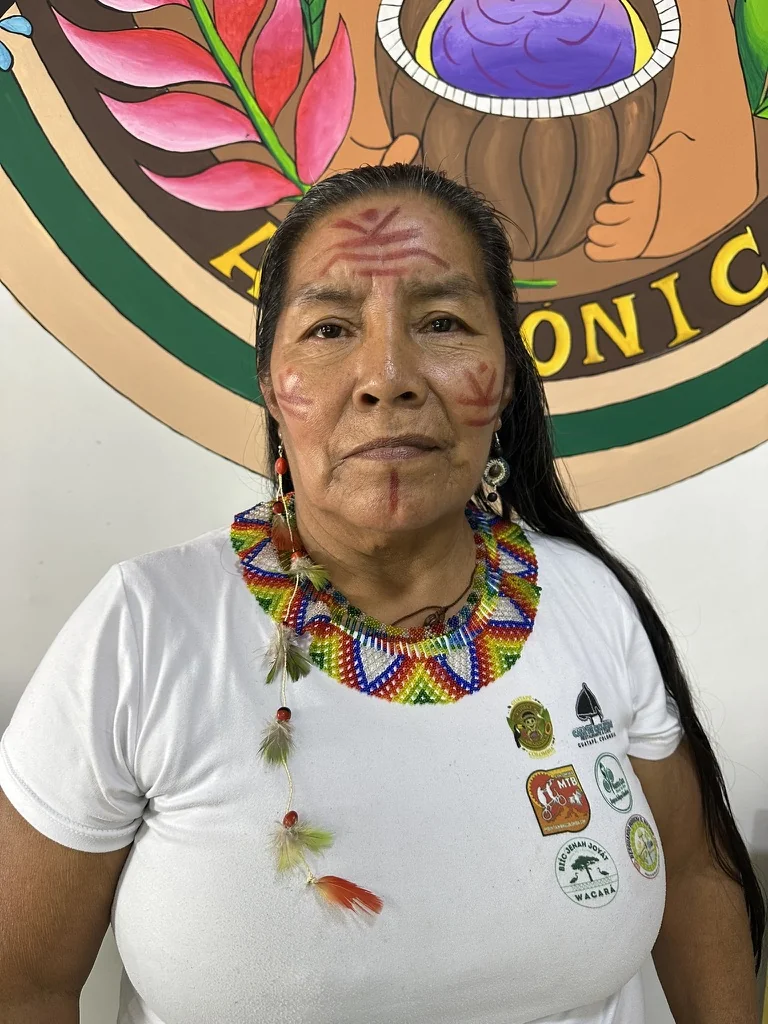
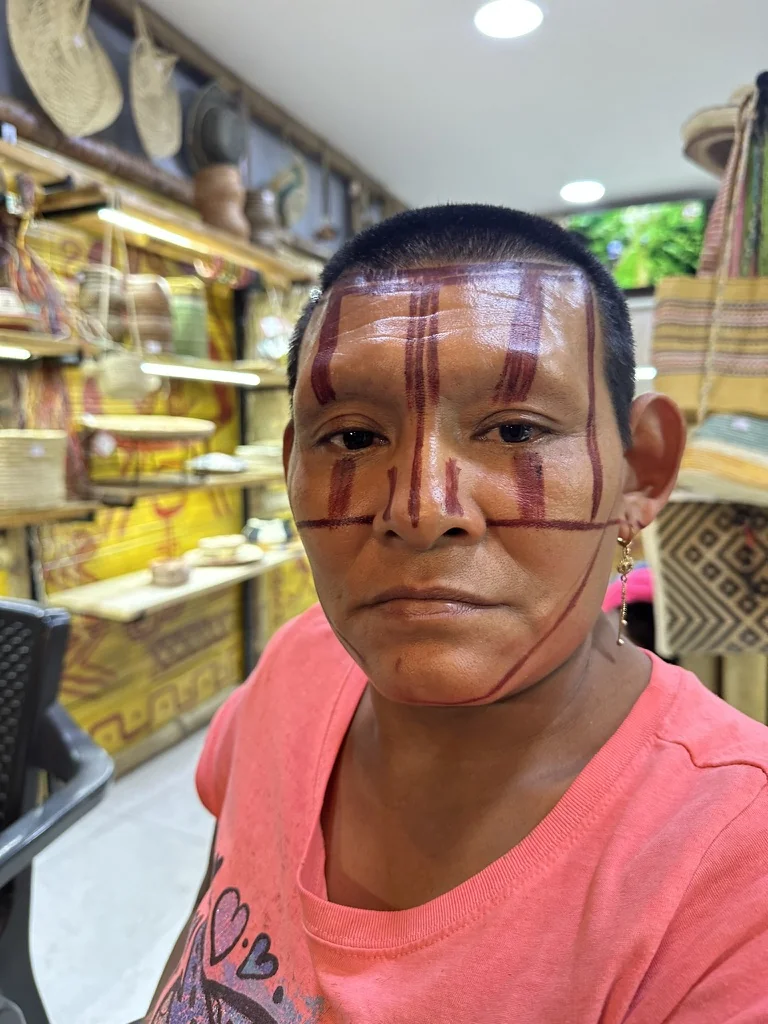
Every 60 days, a new representative from one of the participating Indigenous nations comes to Guatapé as an ambassador. They represent their own nation and also help represent the wider group of communities connected through Dulce Amazónica and the Embajada.
Visitors can meet them, listen to them, ask questions, learn about their territories, and understand what is happening in the Amazon today from someone who carries that reality directly.
When visitors meet an ambassador, something changes. The Amazon stops being an abstract idea. It becomes a person, a voice, a story, a family, a language, a territory, a future.
Amazonian fruits, ice cream, and economic dignity
One of the most joyful ways visitors encounter this mission is through flavor.
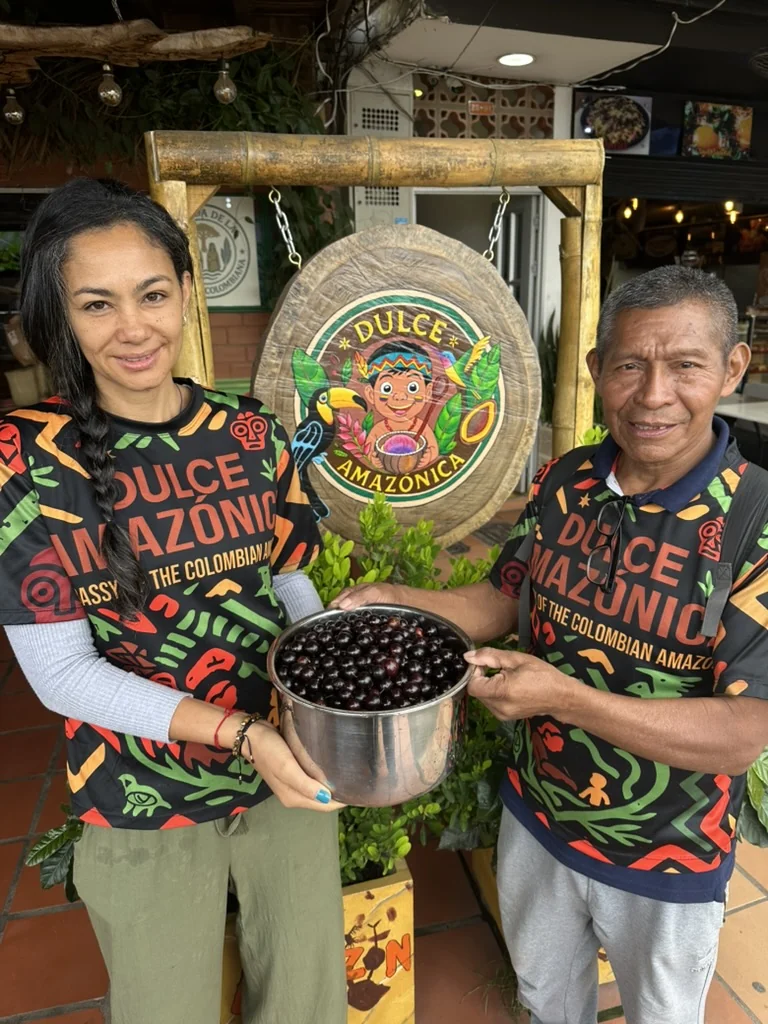
Dulce Amazónica works with 25 different Amazonian fruits collected from nomadic communities and transforms them into ice cream. These flavors are not just desserts. They are introductions to the biodiversity of the Amazon and to the people who know those fruits intimately.
Every cup of Amazonian ice cream carries a story of territory, harvest, movement, tradition, and possibility. It creates economic opportunity, helps communities share what they know, and allows visitors to experience the Amazon through taste before they ever set foot in the forest.
What visitors experience here
A visitor may arrive at Casa de Ciclistas looking for breakfast, lunch, coffee, sourdough, or a place to sit on the malecón. But many leave with something more.
They might meet a cyclist who tells them about a hidden road outside town. They might hear about a humanitarian expedition into the Amazon. They might walk next door and speak with an Indigenous ambassador. They might taste an Amazonian fruit they have never heard of. They might buy artisan work directly from the communities represented there.
This is why we say Casa de Ciclistas is more than a café. It is a place to eat, a place to ride, a place to learn, a place to listen — and a place where Guatapé meets the Amazon.
A different kind of tourism
We believe tourism can do more than consume places. It can create relationships. It can support families. It can open markets for communities that have been excluded. It can help visitors understand the country they are moving through.
Casa de Ciclistas, Mountain Bike Colombia, Dulce Amazónica, and the Embajada de la Amazonía Colombiana are all part of the same living ecosystem. Food, cycling, culture, humanitarian expeditions, artisan work, Amazonian fruits, Indigenous ambassadors, and education are not separate pieces. They are all ways of building bridges.
Visit, listen, and be part of the story
When you eat at Casa de Ciclistas, join a ride, visit Dulce Amazónica, meet an ambassador, or buy artisan work directly from the communities, you are participating in something larger than a meal.
You are helping sustain a project built on family, exploration, dignity, and direct relationships — a different kind of tourism in Colombia, one that begins with coffee and breakfast on the malecón and leads, if you are willing to listen, all the way to the Amazon.
We open at 7:30am. Bikes welcome.
Explore More
Explore More
Explore More